Why Empaths Absorb Other People’s Energy (And How to Stop Carrying It)
Many women who find their way to this work describe themselves as empaths.
They notice subtle shifts in the room.
They feel other people’s emotions quickly.
They absorb tension, conflict, and unspoken dynamics before anyone says anything out loud.
For some, this sensitivity has always been present.
For others, it became more noticeable after years of navigating environments that required constant emotional awareness.
Either way, the experience can feel confusing.
Sensitivity is often misunderstood as weakness or overreactivity.
Over the years I have come to understand this sensitivity through both personal experience and my work studying and supporting nervous system regulation.
From a nervous system perspective, many empaths simply have high perceptual awareness.
Their system is constantly registering emotional and energetic information.
Many empaths assume these reactions are simply part of their personality, never realizing their nervous system may be responding to emotional signals that do not actually belong to them.
That level of awareness can be a gift.
But without regulation and boundaries, it can also become exhausting.
The Nervous System of a Highly Sensitive Person
Empaths often have nervous systems that respond quickly to the emotional environment around them.
This can look like:
Feeling overwhelmed in crowded or chaotic spaces
Taking on other people’s stress or emotions
Difficulty separating personal feelings from the emotional tone of others
Needing more recovery time after social interaction
Feeling responsible for regulating the emotional atmosphere of a room
None of these responses mean something is wrong.
They often reflect a nervous system that has learned to stay highly attuned to external signals.
Over time, that level of vigilance can create fatigue, tension, and emotional overload.
Healing for empaths is rarely about becoming less sensitive.
It is about helping the nervous system learn that it does not have to carry everything it perceives.
When Sensitivity Shows Up Before You Have Words for It
Many empaths recognize the pattern long before they understand it.
You walk into a room and immediately feel tension, even if no one is speaking.
You leave certain conversations feeling exhausted without knowing why.
Someone else’s frustration or sadness lingers in your body long after the interaction ends.
At first it can feel confusing.
You may assume you are simply “too sensitive” or that you need to learn how to toughen up.
But for many empaths, the experience is not about weakness.
It is about a nervous system that has learned to read the emotional environment very quickly, often as a way to stay safe.
My Experience as an Empath
I share this work not only as a practitioner, but as someone who has lived this sensitivity myself.
For most of my life I felt other people’s emotional and energetic states very strongly. I could walk into a room and immediately sense tension, sadness, or conflict, even when no one said anything out loud.
At the time, I didn’t have language for what I was experiencing.
About ten years ago someone first introduced the concept of being an empath to me. That was the first time I considered that what I was feeling might not actually be mine.
Before that realization, I absorbed other people’s energy constantly.
Part of that was instinctive. My nervous system had learned that reading other people helped me feel safe. If I understood what others were feeling, I could anticipate their reactions and respond accordingly.
But what I didn’t realize then was how much that pattern was affecting my own health.
When your system is constantly processing other people’s emotional states, it creates strain on every level: physical, emotional, and energetic.
The turning point came when I began asking a simple question whenever I felt something strongly:
Is this energy mine, someone else’s, or something else entirely?
That question changed everything.
Instead of automatically absorbing what I felt around me, I began noticing what actually belonged to me.
When something wasn’t mine, I learned how to release it.
Over time, my sensitivity became easier to navigate. I could still connect with others and understand what they were experiencing, but I no longer had to carry it in my own body.
Eventually I realized something even deeper.
Empaths do not have to operate by absorbing other people’s energy at all.
Sensitivity does not require self-sacrifice.
It is possible to develop discernment, energetic boundaries, and sovereignty so you can perceive what is happening around you without taking it on as your own.
Learning Discernment Instead of Absorption
As my own awareness grew, I began trusting my inner guidance more.
Instead of feeling everything directly in my body, I learned to listen inward.
If something was important for me to understand, clarity would arrive through intuition, reflection, or a quiet internal signal.
I didn’t have to carry someone else’s emotional state in order to know what was happening.
This realization was freeing.
It also revealed something that many empaths eventually encounter.
Not everyone wants help.
And when someone is not ready to change, absorbing their emotional state does not serve them or you.
It simply drains your nervous system.
Today I still perceive energy and emotional patterns during sessions with clients.
But I no longer take them on as my own.
Instead, I observe them, work with them, and then release them.
After every session I clear my field, ground my nervous system, and return to my own center.
Often that grounding is very simple.
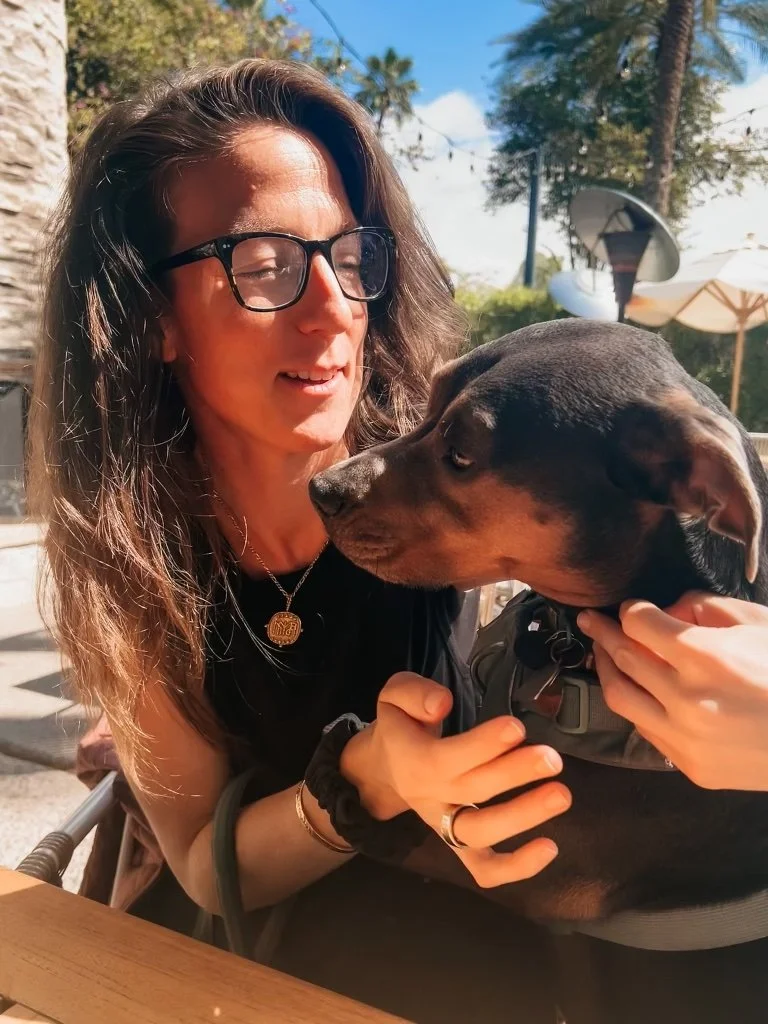
A walk outside with Luna.
A cup of coffee, a piece or two of chocolate, or some hot tea.
A quiet moment to settle my body again.
Those small rituals help my nervous system reset so I can remain present without carrying what doesn’t belong to me.
What I Teach Empaths Now
Much of the work I do today focuses on helping sensitive women develop this same discernment.
Together we explore questions like:
Are you absorbing other people’s energy because it feels safer than focusing on your own life?
Does sensing others help you feel connected or useful?
Have you learned to monitor everyone around you so closely that you’ve lost track of your own internal signals?
These patterns are common for empaths.
But they are not permanent.
Sensitivity can exist alongside strong boundaries, clear self-trust, and energetic sovereignty.
When that shift happens, your awareness stops draining your system and begins supporting it.
And that is when sensitivity becomes a strength rather than a burden.
Why Inner Circle and One-on-One Work Support Empaths
Sensitive nervous systems often benefit from environments that are steady, structured, and safe.
The Inner Circle was designed with that rhythm in mind.
The room is intentionally small.
The work unfolds gradually.
Regulation is built through repetition rather than intensity.
For empaths, this type of space allows the nervous system to soften.
It creates a place where sensitivity is understood rather than overwhelming.
Some women prefer to begin with one-on-one sessions.
Individual work provides a focused environment where the nervous system can explore patterns privately before stepping into group spaces.
Both pathways support the same goal.
Helping your nervous system regulate so sensitivity becomes a source of clarity rather than exhaustion.
Sensitivity Is Not the Problem
Many empaths spend years trying to become less sensitive.
But healing rarely asks you to dull your awareness.
More often, it helps you build the internal stability needed to hold that awareness without losing yourself in it.
When the nervous system feels safe, sensitivity becomes easier to navigate.
You remain perceptive.
You remain intuitive.
But your system no longer needs to carry the emotional weight of every environment you enter.
And that is where true regulation begins.
Many empaths were never taught that what they were feeling might not even belong to them.
Many women who identify as empaths eventually discover that healing becomes easier inside a steady, regulated environment rather than trying to navigate their sensitivity alone.
Healing for empaths is not about becoming less aware.
It is about learning how to stay connected to yourself while navigating the world around you.
When that balance develops, sensitivity becomes a form of perception rather than a source of overwhelm.
And that is when your awareness begins to feel like the strength it was always meant to be.
xoxo,
Dr. Elizabeth + Luna