Why Hyper-Independence Is Often a Nervous System Pattern
Many women wear hyper-independence like armor.
They become the capable one.
The reliable one.
The self-sufficient one.
The one who handles everything on her own.
And from the outside, this often looks strong.
But underneath, many women are not functioning from true safety.
They are functioning from adaptation.
Hyper-Independence Is Often Learned in Survival Mode
Most hyper-independent women did not become that way randomly.
At some point, the nervous system learned:
depending on others did not feel safe
having needs felt uncomfortable
asking for help created disappointment
vulnerability felt risky
being “too much” felt dangerous
So the body adapted.
It learned to:
self-manage
over-function
anticipate needs alone
carry everything internally
avoid relying on others
Not because these women are incapable of connection.
But because their nervous system learned that self-reliance felt safer than dependence.
The Nervous System Often Associates Support With Risk
Many women deeply want support.
But when support actually becomes available, the body may still react with discomfort.
Because receiving requires vulnerability.
And vulnerability can activate old nervous system associations connected to:
disappointment
rejection
loss of control
criticism
inconsistency
emotional exposure
So even healthy support can initially feel unfamiliar or unsafe.
This is why many hyper-independent women unconsciously:
pull away when cared for
minimize their own needs
struggle to ask for help
feel guilty receiving
become uncomfortable being supported consistently
Not because they do not want connection.
But because the nervous system has spent years learning how not to need it.
Over-Functioning Often Creates Exhaustion
Hyper-independence can look productive externally.
But internally, it often creates enormous pressure.
The body remains in constant responsibility.
Constant management.
Constant anticipation.
Constant self-monitoring.
Over time, the nervous system rarely experiences true softness or support because it never fully stops bracing.
Many women become so accustomed to carrying everything alone that they no longer realize how exhausted they truly are.
I Know This Pattern Personally Too
I also know what it feels like to slowly disappear inside over-functioning.
In one of my past relationships, I became so focused on maintaining connection, managing emotions, and keeping everything emotionally stable that I stopped realizing how much I was disconnecting from myself in the process.
I made myself smaller in ways I could not fully see at the time.
I questioned myself more.
Expressed myself less.
Over-accommodated.
Held back parts of myself to avoid defensiveness, discomfort, or conflict.
And because the nervous system adapts gradually, I did not fully realize how much I had dimmed myself until I was finally outside of the relationship looking back.
At the time, it felt like love, responsibility, and emotional maturity.
But underneath it, I was abandoning myself to maintain connection.
One of the deepest parts of healing was realizing that constantly carrying the emotional weight of a relationship was not actually safety.
It was survival.
Healing Often Requires Learning to Receive
One of the deepest shifts in healing is learning that support does not automatically equal danger.
That safe connection exists.
That being cared for does not make you weak.
That you do not have to earn rest, love, or support through over-functioning first.
But for many nervous systems, this takes practice.
Because receiving support is not only emotional.
It is physiological.
The body has to slowly learn:
“I do not have to carry everything alone to stay safe.”
Real Strength Includes Allowing Support
Many women were taught that strength meant never needing anyone.
Never slowing down.
Never struggling.
Never depending on others.
But true nervous system safety often looks very different.
It looks like:
allowing connection
letting yourself be supported
communicating needs honestly
creating reciprocal relationships
softening out of constant self-protection
This is not weakness.
It is healing.
Because eventually the nervous system stops asking:
“How do I survive everything alone?”
And begins learning something entirely different:
“What becomes possible when I no longer have to carry the world by myself?”
If you are realizing how much of your strength was built through survival, over-functioning, and carrying everything alone, this is the work I support women through every day.
Through 1:1 sessions, nervous system work, energetic healing, and deeper emotional integration, we work with the patterns underneath hyper-independence so the body can begin experiencing greater safety, connection, regulation, and support.
If you are ready to stop living in constant self-protection and begin building deeper self-trust and nervous system safety, you can explore working with me privately or inside my Emotional Eating course and support container.
My Emotional Eating course is not just about food. It is about understanding the deeper nervous system patterns underneath over-functioning, self-abandonment, emotional coping, perfectionism, and survival responses, while receiving personalized support throughout the process.
And if you are waiting for future live group spaces to open again, you are always welcome to reach out and learn what is coming next.
XOXO,
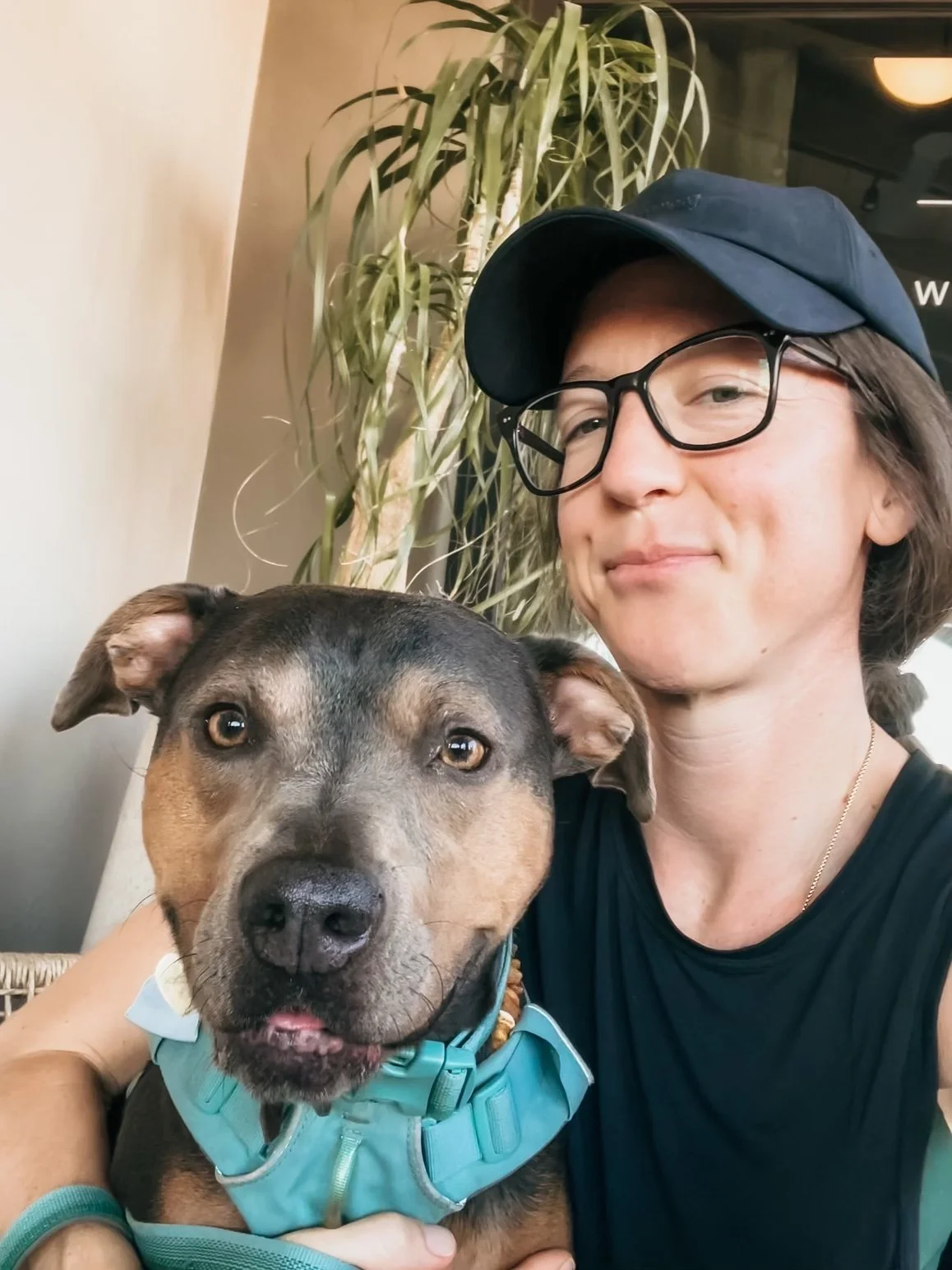
Dr. Elizabeth + Luna