What It Means to Be Your Own Best Healer
There’s a quiet shift that happens at a certain point in healing.
It’s not loud. It’s not dramatic. It doesn’t come with a breakthrough moment or a final diagnosis.
It’s the moment you realize that no one is coming to save you.
And instead of that feeling scary, it feels stabilizing.
Because something deeper clicks into place: you were never meant to be saved. You were meant to participate.
Healing Was Never Meant to Be Outsourced
For a long time, most people move through the world believing healing lives outside of them.
In a practitioner.
In a protocol.
In the “right” test, the “right” supplement, the “right” method.
And to be clear, support matters. Guidance matters. Expertise matters.
But somewhere along the way, the relationship gets inverted.
Instead of support enhancing your connection to your body, it replaces it.
Instead of guidance sharpening your awareness, it overrides it.
And this is where people start to feel stuck.
Not because they haven’t tried enough, but because they’ve slowly been trained to stop listening to themselves.
Your Body Is Not Confusing. It’s Communicating.
One of the biggest distortions in modern healing spaces is the idea that your body is complicated, unpredictable, or unreliable.
It’s not.
It’s incredibly consistent.
What feels confusing is usually the gap between what your body is saying and what you’ve been taught to look for.
Your body doesn’t speak in lab ranges first.
It speaks in sensation.
Tightness.
Fatigue.
Restlessness.
Cravings.
Resistance.
Relief.
These are not random. They are patterns.
And when you start to track them, not analyze them, not fix them, just notice them, you begin to see something powerful:
Your body has been telling the truth the entire time.
Being Your Own Healer Doesn’t Mean Doing It Alone
This is where people often misunderstand the idea of self-healing.
It does not mean:
“I don’t need help.”
It means:
“I stay connected to myself while I receive help.”
There’s a difference.
One disconnects you from support.
The other changes your relationship to it.
Instead of asking,
“What should I do?”
You begin asking,
“What do I notice?”
“What feels true in my body?”
“What shifts when I try this?”
You become an active participant instead of a passive recipient.
And that single shift changes everything.
The Nervous System Is the Gatekeeper of Healing
You cannot access your own inner guidance if your system doesn’t feel safe.
This is not philosophical. It’s physiological.
When your nervous system is dysregulated, your body prioritizes survival over clarity.
That looks like:
• Constant second-guessing
• Seeking reassurance from everyone else
• Over-researching and under-trusting
• Jumping from one solution to the next
Not because you’re doing something wrong, but because your system doesn’t feel anchored.
Safety creates access.
And from that place, something subtle but powerful emerges: discernment.
Discernment Is the Skill That Changes Everything
Discernment is not intuition as a concept.
It’s intuition practiced over time.
It’s the ability to feel:
“This supports me.”
“This doesn’t.”
Without needing external validation to confirm it.
This doesn’t happen overnight.
It builds through:
• noticing your responses
• honoring small signals
• allowing yourself to be right
• allowing yourself to be wrong without collapsing
Every time you listen to your body and stay with what you feel, you strengthen that internal reference point.
And eventually, you don’t need to search as much.
You start to know.
Why the Guru Dynamic Keeps People Stuck
There is a subtle but pervasive pattern in healing spaces: giving your authority away to someone who “knows more.”
Again, expertise is valuable.
But when someone becomes the source of your truth instead of a mirror for it, you lose something essential.
You lose your ability to self-reference.
This creates dependency.
And dependency feels like:
• needing constant guidance to make decisions
• feeling unsure without external input
• fearing you’ll “get it wrong” on your own
True healing work does the opposite.
It gives you tools, language, and awareness, so you can come back to yourself.
What Sovereignty in Healing Actually Looks Like
Sovereignty is not control.
It’s relationship.
It’s being able to sit with your body and ask, “What is happening here?” without immediately trying to fix it.
It’s noticing patterns instead of reacting to symptoms.
It’s trusting that your body is not working against you.
It’s allowing support to refine your awareness, not replace it.
And most importantly, it’s knowing that healing is not something you achieve.
It’s something you participate in, moment by moment.
The Shift That Changes Everything
At some point, healing stops being about: “What’s wrong with me?” and becomes: “What is my body showing me?”
That shift moves you from fear into curiosity. From urgency into awareness. From dependency into self-trust.
And from that place, the work becomes clearer.
Simpler.
More sustainable.
You Were Never Meant to Be Fixed
There is nothing inherently broken about you.
Your symptoms are not failures.
They are responses.
Your body is not behind.
It is adapting.
And your healing is not something someone else holds the answer to.
It is something you learn to access, by reconnecting to what has always been there.
The most powerful healer you will ever work with is the version of you that is willing to listen.
Not perfectly.
Not all at once.
But consistently.
Because the more you return to your body, the less you need to search outside of it.
And that’s where real healing begins.
Not in becoming someone new, but in finally trusting who you already are.
If something in this resonated and you’re ready for more clarity and support:
Inner Circle opens again in June if you’re looking for community, structure, and ongoing guidance inside this work.
And if you’re in a place where you want to understand your body on a deeper, more individualized level, 1:1 work is where we go there together.
Both are designed to bring you back into connection with your body, not pull you away from it.
XOXO,
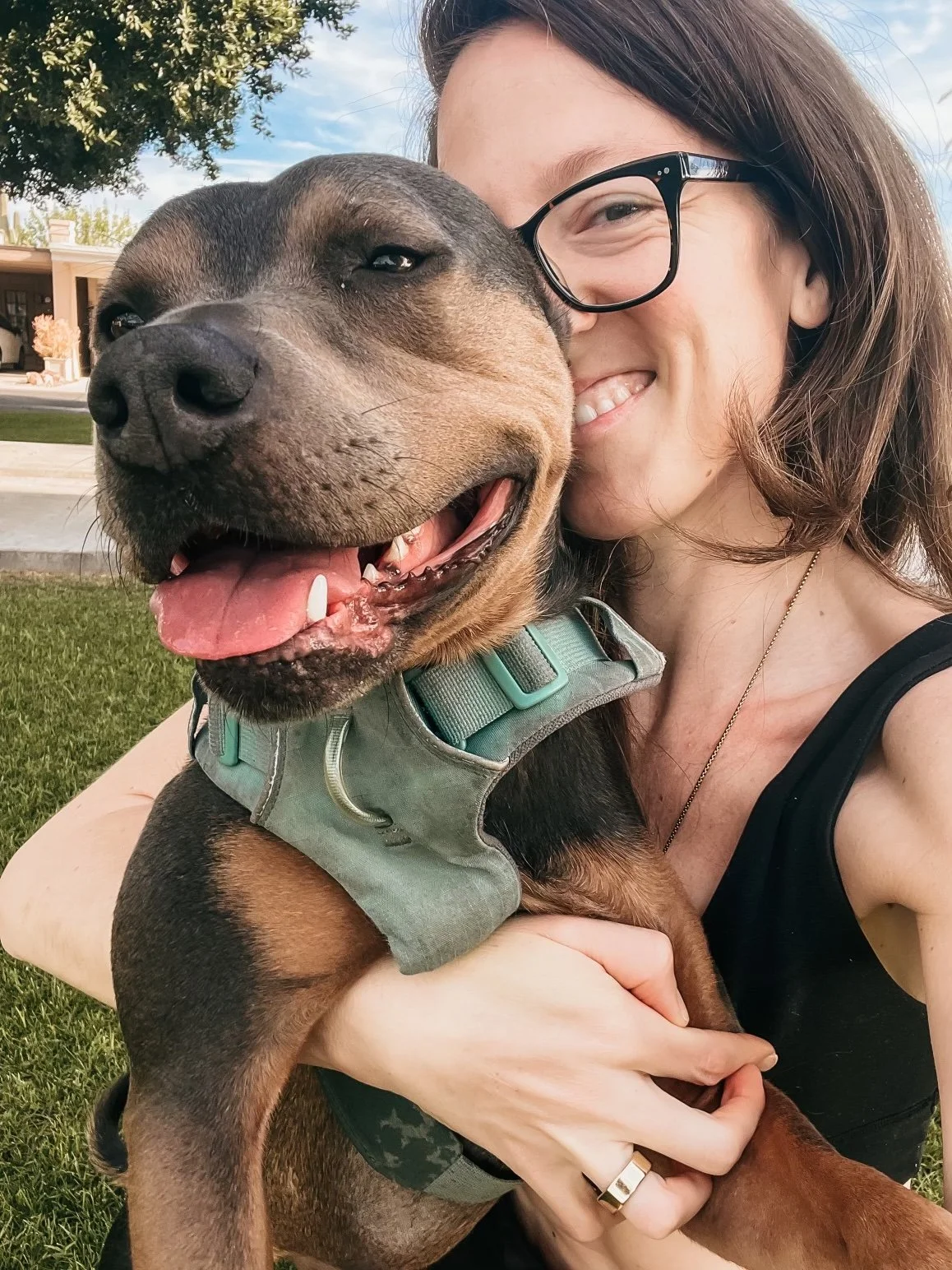
Dr. Elizabeth + Luna